

Vietnam — felt, not toured.
SAPA HILL TRIBE TREK
Three days on foot through the quieter side of Sapa — rice terraces, forest paths and highland villages that most visitors never reach, walked slowly with a local guide and two nights spent inside the homes of the people who live there.
Most people who visit Sapa see the same version of it.
The viewpoints. The main trails. The market on weekends. It is beautiful — but it is also the surface.
Below the town, the paths become smaller. The crowds disappear quickly. What remains are rice terraces, mountain villages, woodsmoke in the morning air, and the slow rhythm of daily life in the valleys.
This is three days inside that version of Sapa. Unhurried. Small group. A guide who knows which path leads where, and which family will have tea on.
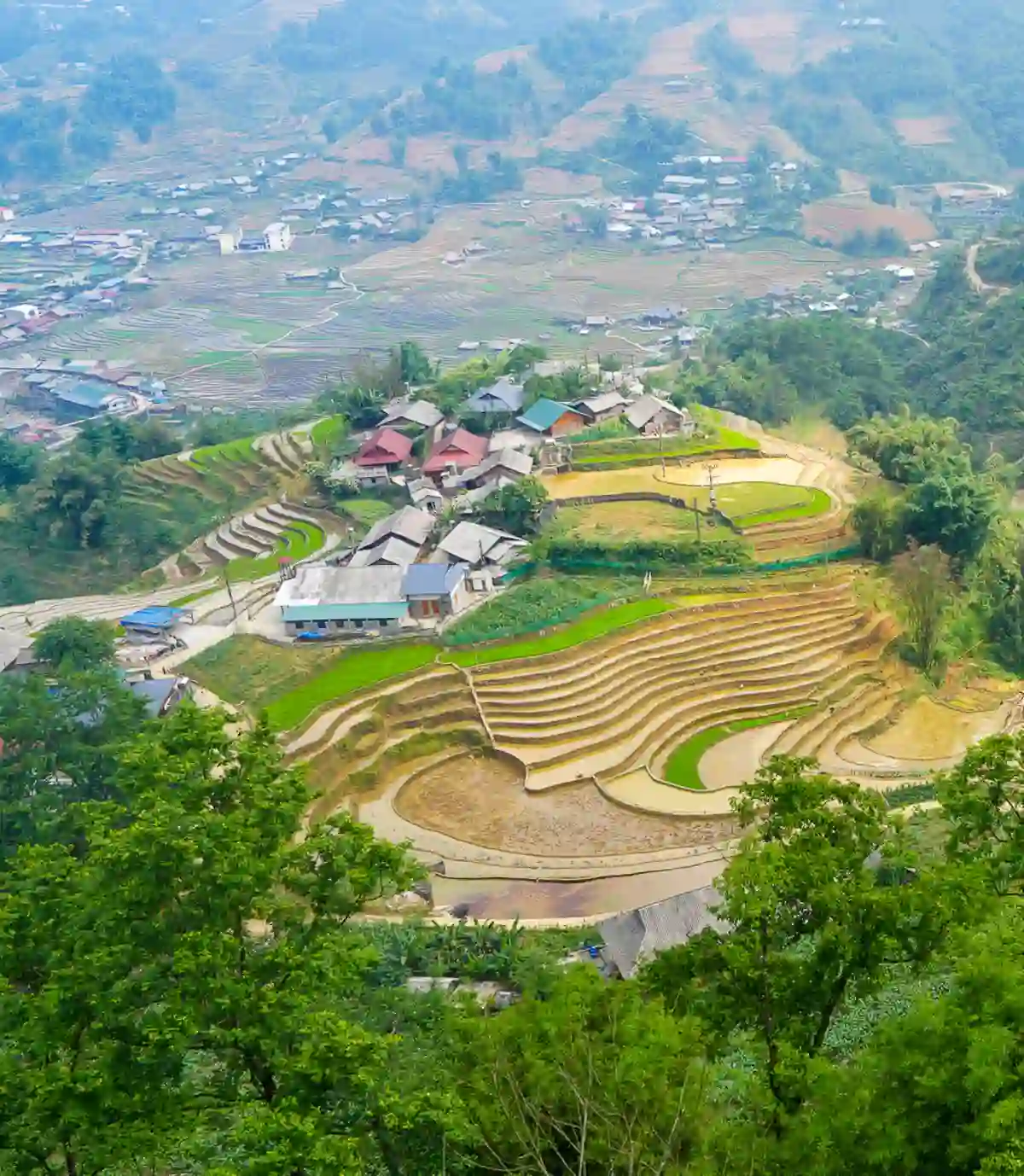
Three days is not a long time. But walked at the right pace, through the right valleys, it is enough to feel the difference between passing through a place and actually being in it.
The route moves through Hmong, Red Dao and Giay villages, staying off the main tourist circuits where possible. Nights are spent in local homestays — not guesthouses. You eat with the family. You sleep in their house. The mornings follow the rhythm of the valley.
What tends to stay with people afterward is not the landscapes. It is the smaller things. The way a village feels at six in the morning before anyone arrives. A lunch that becomes a conversation. The quiet of a mountain homestay after dark.
How the walk unfolds.
A shape for the days, not a fixed schedule. Routes and pace are adjusted each morning for weather, terrain and what the group is feeling.
Into the Valley
The journey begins in Sapa town before the road drops quickly into the valley below. Within the first hour, the noise of the town is gone — replaced by the sound of water, open terraces, and the occasional buffalo moving slowly through a field. The path leads through Hmong hamlets where the day is already underway: smoke rising from kitchens, women working the fields, children disappearing into the mist-covered paths ahead. Lunch is taken at a local home along the route. By late afternoon, the trail reaches the first homestay — a wooden house deep in the valley, surrounded by terraces, with dinner already being prepared in the kitchen. By evening, the valley becomes quiet again.
Between the Clouds
Mist in the morning, always. It sits low over the terraces and lifts slowly, if it lifts at all. This is the longest day of the journey and the most open — paths that climb to wider views of the northwest highlands, then drop into Red Dao and Giay villages where the architecture is older and the pace even slower. There are stops along the way. For tea, for photographs, or simply because the view is worth pausing at. On certain mornings, the valley below disappears entirely into cloud. Lunch is taken in the hills before the trail slowly descends toward the homestay again. Evenings end around the family table.
The Last Morning
The final day begins gently. Breakfast at the homestay, then a short walk through the fields in the early light, while the mist still hangs low over the terraces. A last section of trail through fields and across small wooden bridges, then the road back to Sapa town. Lunch in town. Time to sit. Later in the day, the journey continues toward Lao Cai and the overnight train back to Hanoi.
A complete look at the route, stays, travel styles, and the rhythm of three days on foot through the valleys of Sapa.
Sapa moves at its own pace. This journey follows it.
Travellers who prefer walking to rushing.
People curious about the quieter side of northern Vietnam, and comfortable trading convenience for atmosphere, conversation and time spent close to local life.
You do not need trekking experience. Only a willingness to move slowly through the mountains.
Getting here: overnight train from Hanoi to Lao Cai, then by road to Sapa. Private car also available. Already in town? We depart directly from wherever you are staying.
Travellers looking for luxury resorts or fast-paced sightseeing.
The experience takes place in remote mountain villages where comfort is simple, weather changes quickly, and daily life follows the rhythm of the highlands rather than tourism.
For photographers, the valleys reward patience more than perfect conditions — morning fog, woodsmoke before sunrise, mountains disappearing behind cloud after rain.
A walking journey shaped around the people walking it.
Three days on foot through Muong Hoa and the quieter valleys behind it. Small, private groups. A local mountain guide, and two nights in working family homes — Hmong, Red Dao or Giay — chosen because of who runs them, not how they look from the road. Moderate pace. Honest distances. Weather respected.
- Duration — 3 Days · 2 Nights
- Region — Sapa & Muong Hoa Valley, Northern Vietnam
- Pace — Moderate walking — 8 to 14 km per day, several hours on foot, shaped around your group.
- Group Size — Small and private — six trekkers at most, often fewer.
- Travel style — On foot, with a local mountain guide. Mixed terrain across terraces, mountain paths and village trails.
- Best for — Travellers who prefer walking to rushing, and trade convenience for atmosphere and time close to local life.
- Accommodation — Two nights in village homestays — Hmong, Red Dao or Giay family homes, not guesthouses.
- Best seasons — September to May — clearer mornings, softer light, terraces at their most photogenic.
- Local mountain guide
- Two nights inside village homestays
- Home-cooked meals during the trek
- Entrance fees to local villages
- Drinking water along the route
- Transfers between Sapa and the trailhead
- · Private, small-group trek
- · Local mountain guide
- · Family homestays along the route
- · We reply within 48 hrs
No payment now. We confirm your dates and guide first,
then send a secure payment link.
The route, on a map.
Each waypoint is a real village or trailhead along the walk. Hover the markers — daily routes are adjusted for weather, light, and the village welcome.
The walking ends in Sapa. The feeling of the valleys usually does not.
Long after the train leaves the mountains behind, certain parts of the journey tend to remain — the quiet of the valleys in the early morning, the sound of rain on a wooden roof at night, the feeling of moving through places that still belong more to daily life than tourism.